Life And Death 3,000,000 Years Ago
Lucy, an ancient human ancestor called Australopithecus afarensis, lived about 3.5 million years ago in Africa. She faced many dangers, like large predators, but her survival was possible partly due to her ability to walk upright and possibly spend some time in trees. Lucy's diet included tough plants from the dry savanna, and evidence suggests she might have used simple stone tools to get meat, showing early signs of human-like intelligence and tool-making. Her brain, though similar in size to a chimpanzee's, likely had important differences that allowed for more complex thought. Giving birth was probably difficult for Lucy, leading to more cooperation among females. The role of male Australopithecus in raising children is debated, but longer childhoods suggest more parental involvement. Lucy's death, possibly from a fall or animal attack, would have been a sad event for her group, highlighting the strong social bonds among these early human ancestors.
Key Vocabulary
Describing an animal that walks on two feet.
Examples:
- Kangaroos are naturally bipedal, using their strong legs for hopping.
- The robot was designed to be bipedal, allowing it to navigate uneven terrain.
- While most birds are bipedal, some, like ostriches, are known for their impressive running speed on two legs.
To grow or develop successfully, often in a particular environment.
Examples:
- The new business began to thrive in the growing market, quickly expanding its customer base.
- Certain plants thrive in arid conditions, requiring very little water to survive.
- Despite the challenges, the community continued to thrive, building new schools and parks.
The act of searching for and collecting discarded or leftover items, especially food.
Examples:
- Bears are known for their opportunistic scavenging, often raiding campsites for food.
- After the storm, many people were seen scavenging for usable materials among the debris.
- The urban fox survived by scavenging for scraps of food left by humans.
An athlete or animal that runs at top speed over short distances.
Examples:
- The cheetah is the fastest land animal, a true natural sprinter.
- The Olympic sprinter trained daily to shave milliseconds off his race time.
- Despite his size, the football player was a surprisingly fast sprinter, often outrunning his opponents.
Relating to the bodily structure of an organism.
Examples:
- The anatomical diagrams helped the students understand the complex structure of the human heart.
- Scientists study the anatomical differences between species to trace evolutionary paths.
- During the surgery, the surgeon had to be extremely precise due to the delicate anatomical structures involved.
Remaining hidden, typically in order to ambush or surprise someone or something.
Examples:
- A suspicious character was seen lurking in the alleyway, observing the street.
- The predator was lurking in the tall grass, waiting for the perfect moment to strike.
- There was a sense of unease, as if danger was lurking just out of sight.
Large birds of prey that typically feed on carrion (dead animals).
Examples:
- The vultures circled patiently overhead, waiting for the animal to succumb.
- In many ecosystems, vultures play a crucial role as natural clean-up crews.
- The sight of vultures gathering often indicates the presence of a deceased animal nearby.
Grass-like plants, typically growing in wet ground.
Examples:
- The wetlands were dominated by various types of sedges, providing habitat for numerous bird species.
- Fishermen often find good fishing spots near the banks where sedges grow thickly.
- The farmer considered planting sedges along the river to help prevent soil erosion.
An extinct genus of hominins closely related to australopithecines, characterized by robust skulls and large teeth, adapted for chewing tough plant material.
Examples:
- Fossil evidence suggests that Paranthropus lived alongside early Homo species in East Africa.
- Researchers have debated whether Paranthropus was an evolutionary dead end or contributed to later hominin lineages.
- The discovery of a nearly complete Paranthropus skull provided significant insights into their cranial capacity and diet.
A family of ruminant mammals that includes cattle, goats, sheep, and antelopes, typically characterized by unbranched, permanent horns.
Examples:
- The African savanna is home to a wide variety of bovids, from small gazelles to massive buffalo.
- Ancient cave paintings often depict bovids, indicating their importance to early human societies.
- The domestication of bovids like cattle and sheep revolutionized agriculture and human settlement patterns.
Difference in form or appearance between individuals of the same species, often relating to sex.
Examples:
- Sexual dimorphism is evident in peacocks, where males have much more elaborate plumage than females.
- The degree of dimorphism in a species can provide clues about its social structure and mating systems.
- Some insect species exhibit striking dimorphism, with males and females looking entirely different.
Causing horror or disgust; gruesome.
Examples:
- The detective arrived at the scene of the grisly crime, which left him deeply disturbed.
- The ancient tale recounted a grisly battle with many casualties.
- Despite the grisly details, the documentary provided important historical context.
Strongly attracted and held the attention of; charmed.
Examples:
- The audience was captivated by the magician's incredible illusions.
- She was captivated by the intricate details of the antique map.
- The speaker's powerful storytelling captivated everyone in the room.
To change the way something is organized or functions, especially in the brain.
Examples:
- Learning a new language can literally rewire parts of your brain, improving cognitive flexibility.
- After the accident, therapy helped to rewire neural pathways, allowing for recovery of movement.
- The company's management decided to rewire its entire operational structure to improve efficiency.
Arousing great curiosity or interest; fascinating.
Examples:
- The old manuscript contained an intriguing riddle that no one had been able to solve.
- Her research presented an intriguing new theory about the origins of the universe.
- The detective found the suspect's alibi to be particularly intriguing, raising more questions than answers.
Produced or conducted by two or more parties working together.
Examples:
- The successful completion of the project was a result of a highly collaborative effort by the entire team.
- Modern scientific research often involves collaborative projects spanning multiple institutions.
- The artist's new exhibition featured a collaborative piece created with local community members.
The various ways in which an animal moves, such as walking, trotting, or galloping.
Examples:
- The horse displayed several distinct gaits during the equestrian competition.
- Researchers studied the unique gaits of different dinosaur species based on fossilized footprints.
- Observing a person's gaits can sometimes reveal underlying medical conditions.
Mammals with hooves, typically herbivores.
Examples:
- Deer, horses, and rhinoceroses are all examples of ungulates.
- The migration of large herds of ungulates across the plains is a spectacular natural event.
- Many predators in the savanna rely on ungulates as their primary food source.
To pierce with a sharp point; to make a hole in.
Examples:
- The sharp thorn was enough to puncture the tire, leaving the cyclist stranded.
- The doctor had to puncture the blister to drain the fluid.
- The ancient spearhead was designed to puncture thick hides, making it effective for hunting large game.
Relating to or denoting an animal that hunts and kills other animals for food.
Examples:
- The predatory cat stalked its prey with silent precision.
- Many birds of prey have keen eyesight, making them highly effective predatory hunters.
- The documentary explored the complex relationships between predatory animals and their prey in the rainforest.
Related lessons
 LongThe Final Images We Will Ever See of Pluto and ArrokothScienceHistorical AnalysisAerospace+2 more
 MediumAre There Lost Alien Civilizations in Our Past?ScienceHistorical AnalysisResearcher+1 more
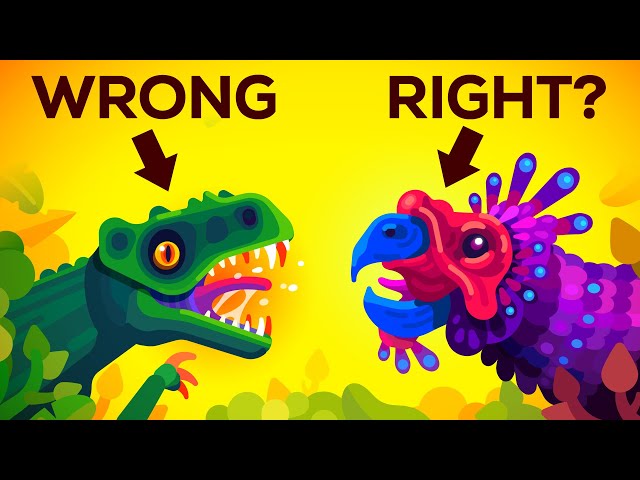 MediumWhat Dinosaurs ACTUALLY Looked Like?ScienceHistorical AnalysisResearcher+1 more
 LongHomo Erectus - The First HumansScienceHistorical AnalysisResearcher+1 more
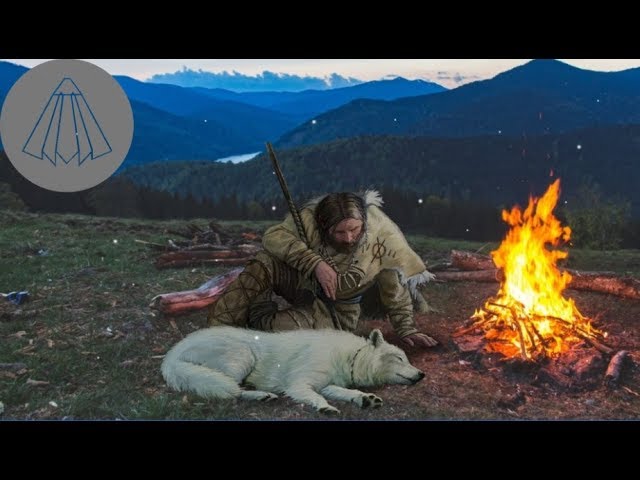 MediumHow Humans and Dogs Evolved TogetherScienceHistorical AnalysisResearcher+1 more
 LongIf you don't understand this, you don't understand evolutionScienceHistorical Analysis