Dev Deletes Entire Production Database, Chaos Ensues
GitLab, a code-sharing platform, experienced a major outage when a team member accidentally deleted their main production database while trying to fix a replication issue. The problem started with the database slowing down due to spam and a large user account deletion. Engineers tried to fix the database replication, but a command was run on the wrong server, wiping out a significant amount of data. They then discovered their backup systems had issues, so they had to restore from an older snapshot from their testing environment. This process took 18 hours, and all data created in the six hours before the incident was permanently lost. The incident highlighted the importance of testing recovery procedures, proper documentation, and careful command execution.
Key Vocabulary
In an online context, a troll is someone who intentionally posts provocative, offensive, or off-topic messages in an online community, such as a forum, social media group, or comment section, with the primary goal of upsetting others or disrupting normal discussion.
Examples:
- The moderator had to ban the user who was acting as a troll, constantly posting inflammatory remarks.
- It's best not to engage with a troll, as they often seek attention and conflict.
- She quickly recognized the comment as the work of a troll and decided to ignore it.
Increased to a higher level or amount than usual, often indicating a concerning or unusual condition.
Examples:
- The system reported an elevated temperature in the server room, prompting an immediate investigation.
- After the software update, the CPU usage remained elevated for several hours.
- The doctor noted the patient's elevated blood pressure during the check-up.
Occurring or operating at the same time or rate, often implying that one action must complete before another can begin.
Examples:
- The two complex machines require synchronous operation to function correctly.
- In a synchronous communication system, both parties must be present and active simultaneously.
- The project team held a synchronous meeting to ensure everyone was on the same page.
Full of or characterized by errors, defects, or malfunctions, especially in software or a system.
Examples:
- The new version of the app was quite buggy, frequently crashing and losing data.
- After several patches, the once buggy game became much more stable.
- Developers worked overtime to fix the buggy code before the product launch.
In computing contexts, 'rm -rf' is a command-line instruction used in Unix-like operating systems to recursively delete files and directories without prompting for confirmation. 'rm' is the remove command, and '-rf' are options meaning 'recursive' (delete directories and their contents) and 'force' (do not prompt for confirmation).
Examples:
- He accidentally ran 'rm -rf' on the wrong directory, deleting all his unsaved work.
- The system administrator warned against using 'rm -rf' carelessly due to its destructive power.
- To clear the temporary files, the script executed 'rm -rf /tmp/*' at startup.
Unwanted or unsolicited electronic messages, typically sent in bulk, often for commercial purposes or to spread malware. In a broader sense, it can refer to any unwanted or irrelevant data.
Examples:
- My email inbox was flooded with spam offers for dubious products.
- The forum implemented new filters to prevent users from posting spam content.
- He regularly checks his spam folder for any legitimate emails that might have been miscategorized.
A delay or slowdown in a system's response time, often noticeable in networking or computing operations.
Examples:
- The video conference experienced significant lag, making communication difficult.
- Gamers often complain about input lag when their actions on the controller are delayed on screen.
- Network lag caused the website to load very slowly during peak hours.
Arranged or set up a system, device, or software with specific settings and options to make it ready for use or to suit a particular purpose.
Examples:
- The new server was configured with enhanced security protocols.
- She carefully configured her development environment to match the project requirements.
- The network router needed to be configured to allow access to the internal servers.
Graphical user interfaces that provide a consolidated, at-a-glance view of key performance indicators, metrics, and other relevant data, often used for monitoring systems or business operations.
Examples:
- The IT team monitored the health of all production services from a central set of dashboards.
- The company's sales dashboards showed a real-time overview of revenue and customer acquisition.
- Customizable dashboards allowed each engineer to track the metrics most relevant to their work.
To synchronize; to cause two or more things to operate or happen in unison, or to ensure that data in different locations is identical or up-to-date.
Examples:
- I need to sync my phone with my computer to transfer the latest photos.
- The project management tool allows teams to sync their tasks across multiple devices.
- The database failed to sync its replica, leading to data inconsistencies.
The action of moving text or images up, down, or across a display screen to view different parts of a document or webpage.
Examples:
- He spent an hour scrolling through social media feeds, looking for updates.
- The designer used a smooth scrolling effect for the website's main page.
- After scrolling through the long report, she found the section she was looking for.
A unit of digital information equal to one billion bytes, often used to measure the capacity of storage devices or the size of data files.
Examples:
- The new hard drive has a capacity of two terabytes, or two thousand gigabytes.
- Downloading the high-definition movie required several gigabytes of internet data.
- My smartphone often runs out of storage because of the many gigabytes of photos and videos.
A warning or proviso of specific conditions or limitations concerning a particular agreement, statement, or action.
Examples:
- The contract came with a caveat that the price could increase based on material costs.
- His offer to help had one major caveat: he would only work on weekends.
- Before accepting the proposal, she noted a caveat about the project's tight deadline.
The delay before a transfer of data begins following an instruction for its transfer, or the time taken for a data packet to travel from one point to another.
Examples:
- High network latency can severely impact the performance of online games.
- The satellite internet connection suffered from significant latency, making real-time communication challenging.
- Engineers worked to reduce the latency in the data processing pipeline to improve system responsiveness.
A colloquial term for a production environment or server, referring to the live system that end-users interact with, as opposed to development or staging environments.
Examples:
- We always test new features thoroughly in staging before deploying them to prod.
- A critical bug was discovered in prod, requiring an immediate hotfix.
- Access to prod servers is strictly controlled and monitored for security reasons.
In a manner where operations do not depend on the completion of previous operations; they can run independently and concurrently without blocking the main program flow.
Examples:
- The application fetches data asynchronously, so the user interface remains responsive.
- To improve performance, the system processed background tasks asynchronously.
- The server handled multiple client requests asynchronously, allowing for greater concurrency.
Small, distinct pieces or fragments of code or text, often reusable or serving a specific, isolated purpose.
Examples:
- The developer kept a library of useful code snippets for common programming tasks.
- She quickly pasted a snippet of the log file into the bug report.
- The website offered snippets of its articles to entice readers to subscribe for full access.
Taking effect from a date in the past, or applying to past events or actions.
Examples:
- The new policy was applied retroactively, affecting decisions made last month.
- They decided to retroactively adjust the employee's pay to reflect their new responsibilities.
- The software update fixed a bug that had been present for weeks, retroactively improving user experience.
In this context, it refers to a clean or fresh start, a blank page upon which new work can begin, implying the removal of previous errors or data.
Examples:
- After the project failed, the team decided to wipe the slate clean and start with a completely new approach.
- The company brought in a new CEO to begin with a fresh slate and redefine its mission.
- He deleted all the old files, wanting to start his new design project on a clean slate.
The process of verifying the identity of a user, system, or process, typically by checking credentials like passwords, security tokens, or biometric data.
Examples:
- Two-factor authentication adds an extra layer of security to online accounts.
- The system requires strong authentication before granting access to sensitive data.
- Failed authentication attempts often indicate a potential security breach.
Related lessons
 MediumLinux: The Untold StoryTechnologySoftware DevelopmentSoftware+3 more
 LongGod-Tier Developer RoadmapTechnologySoftware DevelopmentSoftware+3 more
 LongThe Rise of Oracle, SQL and the Relational DatabaseTechnologySoftware DevelopmentSoftware+3 more
 LongJohn Carmack: Doom, Quake, VR, AGI, Programming, Video Games, and Rockets | Lex Fridman Podcast #309TechnologySoftware DevelopmentSoftware+2 more
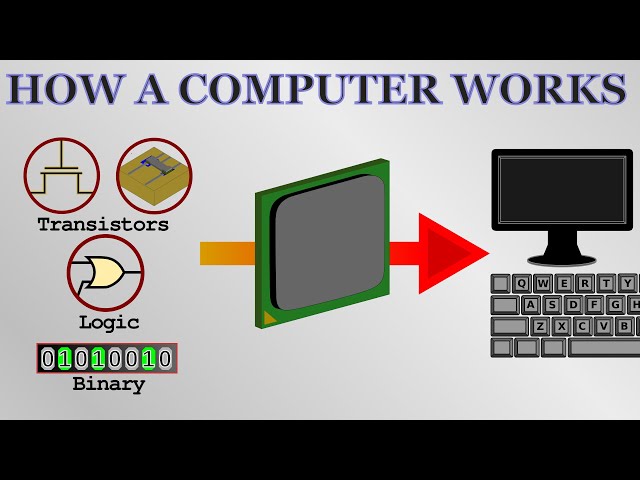 LongHow a Computer Works - from silicon to appsTechnologySoftware DevelopmentSoftware+3 more
 MediumThe Two Generals' ProblemTechnologySoftware DevelopmentSoftware+3 more