The Strange Weirdness Of Language
Language is more complex than we often realize, with rules we follow without being taught, such as the order of adjectives or the way our voice changes for different questions. This shows how language works deep in our minds. Some people believe that the language we speak changes how we think about the world, like how some cultures describe directions or time. However, language also has its limits; words don't have perfect, unchanging meanings, which can cause problems in philosophy and law. Even simple words like "is" or "occurrence" can have many meanings, leading to confusion. Despite these challenges, there are some basic meanings in language, like how certain sounds connect to certain ideas, or how babies' first sounds became words for 'mother' and 'father', showing that language is both mental and physical.
Key Vocabulary
To make an aggressive growl with bared teeth, or to speak or express something in an angry, bad-tempered way. In the context of phonosemantics, it also refers to the physical action of the tongue and mouth when producing certain sounds.
Examples:
- The dog began to snarl at the approaching stranger.
- She let out a snarl of frustration when her computer crashed.
- The comedian's imitation of a grumpy old man included a distinct snarl in his voice.
A breed of dog known for its curly coat and often clipped fur, available in various sizes from toy to standard.
Examples:
- My neighbor walks her miniature poodle every morning.
- The show dog, a grand poodle, won first prize for its elegant stance.
- He always wanted a pet, preferably a fluffy poodle named 'Biscuit'.
To make a sudden, forceful sound through the nose, often expressing amusement, contempt, or indignation. In the context of phonosemantics, it relates to words expressing nasal sensations.
Examples:
- The horse gave a loud snort when it heard the unfamiliar sound.
- He tried to suppress a snort of laughter during the serious meeting.
- With a disdainful snort, she dismissed his ridiculous suggestion.
A class of vertebrate animals characterized by the presence of mammary glands, hair or fur, and typically giving birth to live young.
Examples:
- Whales are fascinating mammals that live entirely in water.
- Humans, cats, and elephants are all examples of mammals.
- One distinguishing feature of mammals is their ability to regulate their own body temperature.
The state or quality of being untrue, incorrect, or deceptive; the lack of authenticity or genuineness.
Examples:
- The detective quickly uncovered the falseness of the witness's alibi.
- Despite his charming demeanor, there was an underlying falseness to his promises.
- The essay revealed the falseness of the popular historical narrative.
Relating to a process or function that is defined in terms of itself, or that involves repeated application of the same rule or procedure. In the context of language, it refers to its self-referential nature in definitions.
Examples:
- The artist created a recursive image, with a picture containing another picture of itself.
- A fractal is a classic example of a recursive geometric pattern.
- The software algorithm was recursive, calling itself until a base condition was met.
Experts or scholars who study language and its structure, development, and relationship to other languages.
Examples:
- Linguists are often fascinated by the unique grammatical structures of ancient languages.
- The team of linguists worked to decipher the newly discovered inscriptions.
- Many linguists believe that language acquisition is a complex cognitive process.
To shine with a soft, sparkling light, typically from a wet or oily surface.
Examples:
- Dewdrops glistened on the spiderweb in the morning sun.
- Her eyes began to glisten with unshed tears after hearing the sad news.
- The freshly polished car began to glisten under the streetlights.
In a way that is based on intuition, meaning without conscious reasoning or proof; instinctively.
Examples:
- She knew intuitively that something was wrong, even though she couldn't explain why.
- The experienced chef intuitively understood how to balance the flavors in the dish.
- He responded to the sudden emergency intuitively, relying on years of training.
Difficult to find, catch, or achieve; hard to grasp or define.
Examples:
- The truth about the ancient mystery remained elusive for centuries.
- He spent years trying to capture the elusive perfect photograph of the rare bird.
- Happiness can sometimes feel like an elusive goal, always just out of reach.
Of which or of what. This archaic or formal term is used to refer back to something previously mentioned.
Examples:
- The contract specified the terms whereof all parties must abide.
- He spoke of a grand plan, whereof the details remained unclear.
- The ancient text describes a prophecy, whereof only fragments survive.
To exchange one thing for another; to trade.
Examples:
- Let's swap seats so you can have a better view.
- They decided to swap responsibilities for the day to experience different tasks.
- I need to swap my old phone for a newer model.
To cover with a smooth, shiny coating, often of a liquid. In the context of phonosemantics, it relates to words about smoothness.
Examples:
- The baker decided to glaze the donuts with a thin layer of sugar icing.
- A thin sheet of ice began to glaze the windshield overnight.
- His eyes seemed to glaze over as the boring lecture continued.
A mistaken belief, especially one based on unsound argument; a flaw or error in reasoning.
Examples:
- The argument presented was based on a common logical fallacy.
- It's a fallacy to assume that all expensive products are superior in quality.
- The idea that success is purely a matter of luck is a dangerous fallacy.
A form of deductive reasoning where a conclusion is drawn from two premises, each of which shares a term with the conclusion and one common term with the other premise.
Examples:
- The classic syllogism is: All men are mortal; Socrates is a man; therefore, Socrates is mortal.
- She structured her argument as a clear syllogism to demonstrate its logical validity.
- Understanding the components of a syllogism is crucial for formal logic.
Represented, expressed, or given a tangible or visible form. In the context of language, it refers to the physical and sensory aspects of its production and comprehension.
Examples:
- The ancient statue embodied the ideals of beauty and strength.
- His leadership style embodied the company's values of innovation and teamwork.
- The new building design embodied a commitment to sustainability.
To shine with a sparkling, often shimmering, light; to be brilliantly attractive or showy. In the context of phonosemantics, it relates to words about light.
Examples:
- The sequins on her dress glittered under the stage lights.
- The snow on the mountain peaks began to glitter as the sun rose.
- There was a mischievous glitter in his eyes when he told the joke.
A surface sheen or luster; a superficial attractiveness or polish. In the context of phonosemantics, it relates to words about smoothness.
Examples:
- The new paint gave the wall a beautiful, high gloss finish.
- She applied a clear gloss to her lips for a subtle shine.
- Despite the glossy exterior, the car's engine was in poor condition.
To perceive or recognize something; to distinguish carefully.
Examples:
- It was difficult to discern the faint handwriting on the old document.
- She could discern a hint of sadness in his voice despite his cheerful words.
- With practice, he learned to discern the subtle differences between various wines.
The projecting nose and mouth of an animal, especially a mammal. In the context of phonosemantics, it relates to words expressing nasal sensations.
Examples:
- The pig rooted around in the mud with its snout.
- The dog's wet snout nudged my hand, seeking attention.
- He drew a cartoon character with a long, pointed snout.
Related lessons
 Shortthere'dn't'veHumanitiesCommunication SkillsPublishing+3 more
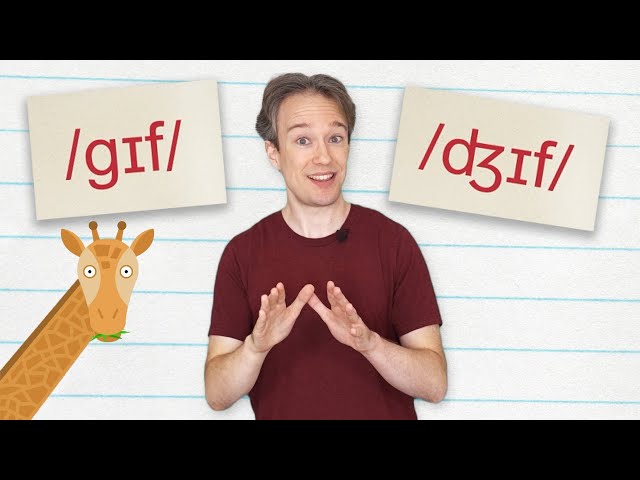 ShortIt's pronounced GIF.HumanitiesCommunication SkillsMedia+3 more
 ShortƏ: The Most Common Vowel in EnglishHumanitiesCommunication SkillsEdTech+3 more
 MediumAbso-bloody-lutely: Expletive InfixationHumanitiesCommunication SkillsPublishing+3 more
 ShortWhat Counts as a Word?HumanitiesCommunication SkillsPublishing+3 more
 ShortLong and Short Words: Language TypologyHumanitiesCommunication Skills