Why More Education Is Not Always Better
Education is very important for a country's economic success, as well-educated people can create more value. However, too much education can sometimes be a problem, especially if people are studying subjects that are not needed by the job market, leading to skill shortages and student debt. While some theories suggest more education is always better, others argue that the value of skills depends on what society needs. Currently, many advanced economies are seeing too many people with advanced degrees and not enough people with practical trade skills, which could get worse as global trade changes. Finding the right balance in education is key for a healthy economy, and some countries are already seeing a shift away from university degrees towards more practical skills.
Key Vocabulary
Designed for efficiency and comfort in the working environment, aiming to minimize discomfort and maximize productivity by optimizing the interaction between people and their tools or environment.
Examples:
- The new office chairs are all ergonomic, providing excellent lumbar support for long hours of work.
- An ergonomic keyboard can significantly reduce wrist strain for frequent typists.
- The car's interior features an ergonomic layout, placing all controls within easy reach of the driver.
Considered to be worth less than its true value or importance, often leading to lower compensation or appreciation.
Examples:
- Many essential service workers feel undervalued due to their low wages despite their critical contributions.
- The antique painting was initially undervalued by the appraiser, but its true worth was later discovered.
- Her dedication and hard work often went unnoticed, leaving her feeling undervalued by the team.
Minor accidents, mistakes, or misfortunes that are usually not serious.
Examples:
- Despite careful planning, a few small mishaps occurred during the event setup.
- The chef laughed off the kitchen mishaps, quickly correcting the spilled ingredients.
- Travel insurance can provide peace of mind in case of unexpected mishaps during a trip.
An excessively large quantity or supply of something, often more than is needed or can be managed.
Examples:
- The garden produced an overabundance of tomatoes this summer, more than we could possibly eat.
- An overabundance of information can sometimes make it harder to make a clear decision.
- The market experienced an overabundance of luxury apartments, leading to a drop in rental prices.
Supported financially, often by a government or organization, to keep prices low or to support a particular activity.
Examples:
- Public transportation in the city is heavily subsidized to encourage its use and reduce traffic congestion.
- Many agricultural products are subsidized to protect farmers' incomes and ensure food supply.
- The company offers subsidized meals to its employees, making healthy eating more affordable.
Capable of being used or put into operation; functional.
Examples:
- After the repairs, the old machinery was once again fully operable.
- The new software is not yet operable on all devices.
- For the system to be operable, all components must be correctly installed.
Relating to politics, especially international relations, as influenced by geographical factors.
Examples:
- The region's geopolitical stability is crucial for global trade routes.
- Analysts discussed the geopolitical implications of the new trade agreement.
- Historical events often have deep roots in geopolitical rivalries and resource control.
Having a system that cools and often dries the air in a building or vehicle.
Examples:
- The hotel room was wonderfully airconditioned, offering a cool escape from the summer heat.
- Modern trains are fully airconditioned, providing a comfortable journey for passengers.
- Working in an airconditioned office during a heatwave is a significant comfort.
The consequences or after-effects of a significant unpleasant event.
Examples:
- In the aftermath of the storm, emergency services worked tirelessly to restore power.
- The company faced significant challenges in the aftermath of the economic downturn.
- The community came together to rebuild in the aftermath of the fire.
Large-scale; relating to a large or overall perspective.
Examples:
- The economist focused on the macro trends affecting global markets.
- From a macro perspective, the project's long-term benefits outweigh the initial costs.
- The study examined the macro-level impact of policy changes on national employment.
To begin a course of action, especially one that is important or demanding.
Examples:
- She decided to embark on a new career path after years in the same industry.
- The team is ready to embark on the challenging expedition to the remote island.
- Before you embark on a major renovation, ensure you have a clear plan and budget.
Relating to the branch of economics concerned with large-scale or general economic factors, such as interest rates and national productivity.
Examples:
- Government policies often aim to influence macroeconomic indicators like inflation and unemployment.
- The central bank's decisions have significant macroeconomic consequences for the entire nation.
- Understanding macroeconomic trends is essential for predicting future economic growth.
In a mistaken or incorrect way.
Examples:
- The report erroneously stated the company's profits, requiring a correction.
- He erroneously believed the store was open, only to find it closed.
- The data was erroneously entered, leading to inaccurate results.
Having more education than is necessary or appropriate for a particular job or situation, sometimes leading to difficulty finding suitable employment.
Examples:
- Some graduates feel overeducated for entry-level positions that don't utilize their advanced skills.
- The company hesitated to hire her, fearing she might be overeducated for the role and quickly become bored.
- He found himself overeducated for the local job market, which primarily offered manual labor roles.
A short, amusing, or interesting story about a real incident or person.
Examples:
- The professor began his lecture with a humorous anecdote to capture the students' attention.
- She shared a personal anecdote about her travels to illustrate the importance of cultural understanding.
- His speech was filled with charming anecdotes that made the audience laugh.
To a very great degree or with a great majority.
Examples:
- The new policy was overwhelmingly supported by the public.
- The evidence overwhelmingly pointed to his guilt.
- She felt overwhelmingly grateful for the support she received during her difficult time.
A companion, a fellow member of a group or organization, or a close associate, often used in a political or military context.
Examples:
- He fought alongside his comrades during the war, forming an unbreakable bond.
- Addressing his fellow party members, he began, 'My dear comrades, we have much work to do.'
- She considered her research partner a true comrade in their shared scientific endeavors.
Situated or occurring on land, as opposed to at sea or in a foreign country; within the country's borders.
Examples:
- The company decided to bring its manufacturing operations back onshore to reduce supply chain risks.
- Onshore wind farms are becoming a significant source of renewable energy.
- The government is encouraging more businesses to establish onshore operations.
Having more qualifications, skills, or experience than are required for a particular job or position.
Examples:
- The hiring manager worried that the candidate was overqualified and might leave for a more challenging role soon.
- He felt overqualified for the entry-level position, but he needed the work.
- Being overqualified can sometimes be a disadvantage when applying for certain jobs.
The action of cutting grass or other vegetation with a machine or tool.
Examples:
- He spent the afternoon mowing the lawn, enjoying the fresh air.
- The sound of mowing started early in the morning from the golf course next door.
- Regular mowing helps keep the park looking neat and well-maintained.
Related lessons
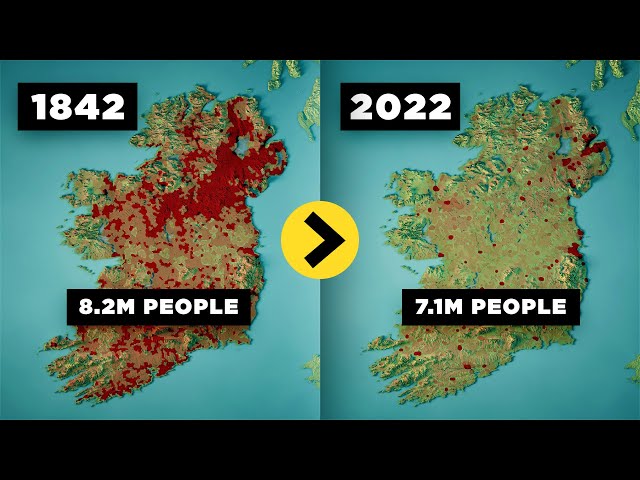 LongWhy Ireland Has Fewer People Than 200 Years AgoEconomicsEconomic ForecastingGovernment+3 more
 LongThe UK's Debt Crisis ExplainedEconomicsEconomic ForecastingGovernment+3 more
 MediumWhy the Philippines is Suddenly becoming Asia's Most Important CountryEconomicsEconomic ForecastingGovernment+3 more
 LongAre Boomers The Most Selfish Generation In History?EconomicsEconomic ForecastingFinance+3 more
 LongEverything You Need to Know About China's Ruthless EconomyEconomicsEconomic ForecastingFinance+3 more
 LongWe Can't Afford Groceries, Yet Billionare Wealth is ExplodingEconomicsEconomic ForecastingFinance+3 more