Ə: The Most Common Vowel in English
English spelling is difficult because many vowels can sound like "schwa," which is a quick, unstressed sound like the "a" in "about." This sound can be represented by any vowel letter (A, E, I, O, U) and is often used in everyday speech, making it hard for learners to know which letter to use for a particular sound. This is why spelling reformers find it hard to make English spelling more consistent, as words are often pronounced differently in fast speech compared to how they are spelled.
Key Vocabulary
To push or prod something, often with a finger or a pointed object, typically to get a reaction or to explore.
Examples:
- She decided to poke the soft dough to see if it was ready for baking.
- The child used a stick to gently poke the leaves on the ground.
- He couldn't resist the urge to poke his friend's ribs, trying to make them laugh.
A misspelling of the word 'camera,' a device used for recording visual images in the form of photographs or video.
Examples:
- My old camra is broken, so I need to buy a new one for my trip.
- The photographer adjusted the settings on his camra before taking the shot.
- She held up her camra to capture the beautiful sunset over the mountains.
An incorrect spelling of a word.
Examples:
- The teacher corrected the common misspelling of 'definitely' on the student's paper.
- Despite his careful proofreading, he found one misspelling in the final draft.
- The software highlighted a potential misspelling in the document, suggesting a correction.
Individuals who share authorship of a written work, typically on a collaborative project.
Examples:
- The two researchers worked as coauthors on the groundbreaking scientific paper.
- She thanked her coauthors for their invaluable contributions to the book.
- The professor often encourages his students to become coauthors on research presentations.
A sequence of letters that represents various vowel sounds in English, making it a common source of pronunciation and spelling challenges.
Examples:
- The 'ough' in 'through' sounds very different from the 'ough' in 'tough'.
- Learning the different pronunciations of 'ough' words can be quite tricky for English learners.
- She struggled to remember whether 'bough' or 'bought' used the same 'ough' sound.
Spoken indistinctly, often by running sounds or words together, making them difficult to understand.
Examples:
- His speech became slurred after he had stayed up all night studying.
- The tired speaker's words were slightly slurred by the end of the long presentation.
- When he woke up, his voice was a bit slurred, making it hard to form clear sentences.
The study and classification of speech sounds, focusing on their production, acoustic properties, and perception.
Examples:
- Students in the linguistics program spend a lot of time studying phonetics to understand how sounds are made.
- The teacher used a phonetics chart to explain the different vowel sounds in English.
- His research in phonetics aims to improve speech recognition technology.
The unstressed, central vowel sound in English, often represented by the symbol /ə/, which is common in reduced syllables.
Examples:
- The 'a' in 'about' is a classic example of the schwa sound.
- Many unstressed syllables in English words are pronounced with a schwa.
- Understanding the schwa helps in accurately pronouncing words in their natural, spoken form.
A thick, malleable mixture of flour and liquid, used for baking bread, pastries, and other food items.
Examples:
- She kneaded the bread dough until it was smooth and elastic.
- The recipe called for the dough to rise for at least an hour.
- He rolled out the cookie dough thinly before cutting out shapes.
A particular form of a language that is specific to a regional or social group, often characterized by distinct vocabulary, grammar, and pronunciation.
Examples:
- The local dialect included several words that were unfamiliar to visitors from other regions.
- She could tell by his accent that he spoke a specific regional dialect.
- Studying different dialects helps linguists understand the evolution of language.
The scientific study of language and its structure, including the study of grammar, syntax, and phonetics.
Examples:
- He decided to major in linguistics because of his fascination with how languages work.
- Her research in linguistics focuses on language acquisition in children.
- The conference brought together scholars from various fields of linguistics.
To direct one's efforts or attention towards a specific goal or target.
Examples:
- The company's new strategy aims to increase customer satisfaction.
- Her studies aim to provide a deeper understanding of ancient civilizations.
- The marketing campaign aims to reach a broader audience.
Not normal or typical; artificial or forced, often sounding or feeling awkward.
Examples:
- His forced smile looked completely unnatural in the photograph.
- The actor's movements on stage seemed stiff and unnatural.
- She found the silence in the room to be unnatural and unsettling.
Having limits or bounds; not infinite; capable of being measured or counted.
Examples:
- The Earth's resources are finite, so we must use them responsibly.
- In grammar, a finite verb is one that shows tense and agrees with its subject.
- The project has a finite deadline, and all tasks must be completed by then.
Without conscious thought or effort; as a natural or automatic response.
Examples:
- When the ball flew towards him, he instinctively raised his hands to catch it.
- She knew instinctively that something was wrong, even before anyone spoke.
- The cat instinctively arched its back and hissed at the unexpected noise.
In language, the emphasis placed on a particular syllable or word in speech, making it more prominent.
Examples:
- The stress on the first syllable of 'present' changes its meaning from a noun to a verb.
- He tried to put more stress on the key points of his argument.
- Correct stress can make a significant difference in how a word is understood.
Elegant, stylish, or upper-class in a way that can sometimes seem affected or pretentious; often associated with a particular accent or manner.
Examples:
- She put on her most posh accent when speaking to the Queen.
- The restaurant had a very posh atmosphere, with velvet curtains and crystal chandeliers.
- He tried to sound posh, but his true accent occasionally slipped through.
A unit of pronunciation having one vowel sound, with or without surrounding consonants, forming the whole or a part of a word.
Examples:
- The word 'water' has two syllables: 'wa-ter'.
- Children learn to clap out the syllables in words to help with reading.
- When you speak clearly, you articulate every syllable distinctly.
To change something from one form or system to another.
Examples:
- They needed to convert the old barn into a habitable living space.
- The software can convert PDF files into editable documents.
- She learned how to convert units of measurement in her science class.
To expel air from the lungs suddenly and noisily, often as a result of irritation of the respiratory passages or to clear them.
Examples:
- He tried to suppress a cough during the quiet performance.
- A persistent cough kept her awake for most of the night.
- The doctor advised him to drink plenty of fluids to help his cough.
Related lessons
 Shortthere'dn't'veHumanitiesCommunication SkillsPublishing+3 more
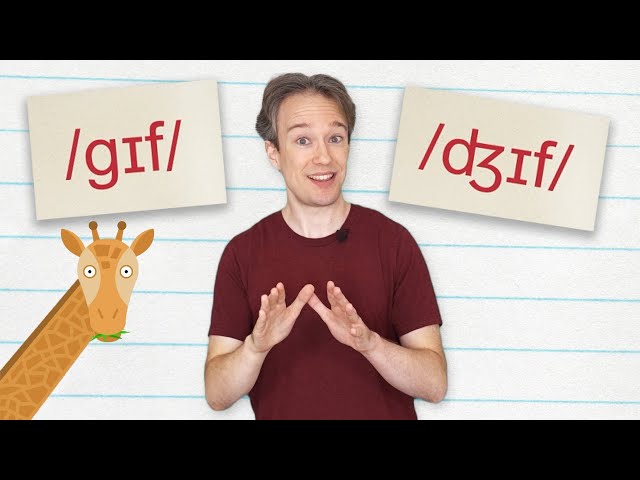 ShortIt's pronounced GIF.HumanitiesCommunication SkillsMedia+3 more
 MediumAbso-bloody-lutely: Expletive InfixationHumanitiesCommunication SkillsPublishing+3 more
 ShortWhat Counts as a Word?HumanitiesCommunication SkillsPublishing+3 more
 ShortWhy Can't Adults Learn Languages Like Children?Professional DevelopmentCommunication SkillsEdTech+3 more
 MediumDuolingo: You're not learning a language, and Duo the Owl is a fraudProfessional DevelopmentCommunication SkillsEdTech+3 more