Something Terrible Is Happening in Italy
Italy's economy is a fascinating case study because it faces many major challenges that other countries are also dealing with, such as high national debt, an aging population, and young skilled workers leaving the country. Despite being one of the largest economies in the EU, Italy has experienced slow growth and periods of stagnation since World War II. The country's economy has gone through cycles of rapid growth, often driven by exports of high-quality goods, followed by slowdowns due to issues like irresponsible borrowing and tax avoidance. Today, Italy struggles with small, less productive businesses compared to its European rivals, low investment in technology, and a significant black market. These factors, combined with an aging population and high poverty, make it difficult for Italy to achieve another period of strong economic growth.
Key Vocabulary
A person who is the leader of an organized crime family or syndicate, often associated with a powerful and influential figure in a criminal underworld.
Examples:
- The small town was rumored to be under the thumb of a shadowy godfather who controlled all illicit activities.
- The movie depicted the rise and fall of a powerful godfather, showcasing the complexities of his criminal empire.
- Despite his benevolent public image, many suspected he was the true godfather of the city's black market.
Ambiguities or omissions in a law, rule, or contract that allow someone to avoid an obligation or exploit an advantage without technically breaking the law.
Examples:
- The company found a legal loophole that allowed them to avoid paying certain taxes.
- Politicians are often criticized for creating loopholes that benefit special interest groups.
- The lawyer was an expert at identifying loopholes in contracts to protect his clients' interests.
An activity done regularly for enjoyment; a hobby.
Examples:
- Gardening became a relaxing pastime for her after she retired.
- For many, watching sports on the weekends is a popular pastime.
- Collecting vintage stamps was his quiet pastime, offering a peaceful escape from daily stress.
A temporary interval of quiet or lack of activity.
Examples:
- There was a brief lull in the conversation before the main topic was introduced.
- After the initial excitement, the market experienced a lull in trading activity.
- The afternoon brought a welcome lull in the oppressive heat.
Skill in a particular craft, especially in the creation of artistic or high-quality goods.
Examples:
- The antique furniture was admired for its exquisite craftsmanship and intricate details.
- The watchmaker's craftsmanship was evident in every tiny component of the timepiece.
- Her pottery studio is known for the exceptional craftsmanship of its unique ceramic pieces.
In a way that shows a lack of responsibility or care for the consequences of one's actions; carelessly or recklessly.
Examples:
- He acted irresponsibly by not checking the safety equipment before starting the climb.
- The company was accused of behaving irresponsibly with its waste disposal practices.
- Spending money irresponsibly can lead to significant financial difficulties in the long run.
Possessing more education than is necessary or useful for one's current employment or societal role, sometimes implying that such education makes one less adaptable or practical.
Examples:
- Some argue that too many graduates are overeducated for the entry-level jobs available in the current market.
- She felt overeducated for a position that required only basic administrative tasks.
- The company struggled to retain its highly qualified staff, as many felt they were overeducated for the limited opportunities.
A balance achieved between two desirable but incompatible features; a compromise.
Examples:
- There's always a tradeoff between speed and accuracy in project completion.
- The new policy represents a tradeoff between environmental protection and economic growth.
- For many small businesses, there's a tradeoff between offering competitive prices and maintaining high profit margins.
A mass departure of people, especially emigrants.
Examples:
- The oppressive regime led to a mass exodus of its citizens seeking refuge abroad.
- After the factory closed, there was an exodus of workers from the small town.
- The high cost of living in the city prompted an exodus of young professionals to more affordable areas.
The amount added to the cost price of goods to cover overheads and profit.
Examples:
- Luxury brands often apply significant markups to their products due to perceived value and exclusivity.
- The retailer's markups on imported goods were criticized for being excessively high.
- Understanding typical industry markups is crucial for setting competitive prices.
Manual calculating devices consisting of a frame with rows of wires or grooves along which beads are slid, used for performing arithmetic calculations.
Examples:
- Before the advent of electronic calculators, abacuses were widely used in many parts of the world.
- Learning to use abacuses can help develop mental arithmetic skills in children.
- The old merchant still preferred his trusty abacus for quick calculations in his shop.
To offer goods or services at a lower price than a competitor.
Examples:
- New online retailers often try to undercut established stores to gain market share.
- Their strategy was to undercut the competition by reducing production costs.
- The local bakery found it difficult to compete with the large supermarket chain, which could undercut its prices.
To grow or develop in a healthy or vigorous way, especially as the result of a particularly favorable environment.
Examples:
- The small business began to flourish once it adapted its services to meet local demand.
- With proper care and sunlight, the garden is sure to flourish.
- New ideas can flourish in an environment that encourages creativity and open discussion.
Lacking energy or momentum; slow-moving or inactive.
Examples:
- The economy remained sluggish, showing little sign of recovery after the downturn.
- After a heavy meal, I often feel sluggish and disinclined to work.
- The old car's engine was sluggish, struggling to accelerate on the highway.
A prolonged period of little or no growth or movement, especially in an economy or a process.
Examples:
- The country experienced a decade of economic stagnation, leading to widespread unemployment.
- A lack of innovation can lead to technological stagnation in an industry.
- The project suffered from stagnation due to a lack of clear leadership and direction.
Represented or regarded as perfect or better than in reality; to form an ideal of.
Examples:
- The artist's painting presented an idealised version of rural life, free from hardship.
- Children often have an idealised view of their heroes, overlooking any flaws.
- The historical account was criticized for presenting an idealised portrayal of the past.
An abrupt or unexpected change, especially one that results in a more favorable situation; a reversal of fortune or policy.
Examples:
- The new CEO was credited with the remarkable turnaround of the struggling company.
- After several losses, the team achieved an impressive turnaround with a series of wins.
- The government's new economic plan aims to achieve a quick turnaround in the national debt.
Showing no activity; dull and sluggish; or (of water or air) having no current or flow and often having an unpleasant smell as a result.
Examples:
- The stagnant pond was a breeding ground for mosquitoes.
- Without fresh ideas, the committee's progress became stagnant.
- The job market remained stagnant, offering few opportunities for recent graduates.
Organized differently; changed the structure of something.
Examples:
- The company restructured its departments to improve efficiency.
- After the merger, the entire management team was restructured.
- The educational system was restructured to better meet the needs of modern students.
The consequences or after-effects of a significant unpleasant event.
Examples:
- In the aftermath of the storm, emergency services worked tirelessly to restore power.
- The country faced significant challenges in the aftermath of the economic crisis.
- The legal aftermath of the accident lasted for several years.
Related lessons
 LongThe UK's Debt Crisis ExplainedEconomicsEconomic ForecastingGovernment+3 more
 LongAre Boomers The Most Selfish Generation In History?EconomicsEconomic ForecastingFinance+3 more
 LongEverything You Need to Know About China's Ruthless EconomyEconomicsEconomic ForecastingFinance+3 more
 LongWe Can't Afford Groceries, Yet Billionare Wealth is ExplodingEconomicsEconomic ForecastingFinance+3 more
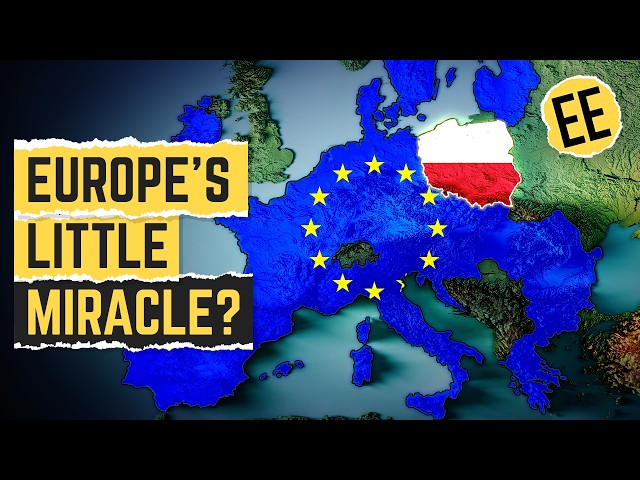 MediumHow Poland Quietly Became Europe’s Rising PowerEconomicsEconomic ForecastingFinance+3 more
 LongWhy Japan's Economy Is AwfulEconomicsEconomic ForecastingFinance+3 more