What Counts as a Word?
Counting words can be tricky because a word's definition changes. In writing, it's often letters separated by spaces, but this doesn't always work for spoken language with contractions like "Ida" (I would have). Words also change over time, like "today" becoming one word from two. For languages where one long sound can mean a whole sentence, counting words is even harder. While word counts are useful for checking essay length, linguists often prefer to study smaller parts of words called morphemes or larger groups of words called phrases because words themselves are not always clearly defined. Even emojis and emoticons raise questions about what counts as a word.
Key Vocabulary
The smallest meaningful units of language, which can be a word or a part of a word that carries meaning.
Examples:
- The word 'unbreakable' consists of three morphemes: 'un-', 'break', and '-able'.
- Understanding morphemes helps in analyzing how new words are formed in a language.
- Linguists often break down complex words into their constituent morphemes to study their structure.
A simplified drawing of a smiling face, used to convey happiness or a friendly attitude, especially in electronic communication.
Examples:
- She ended her text message with a smiley to show she was joking.
- The child drew a big smiley on the card for her grandmother.
- Adding a smiley to an email can soften the tone of a challenging request.
People who study language and its structure, including its grammar, history, and development.
Examples:
- The linguists debated the origins of the ancient dialect.
- Many linguists are interested in how children acquire language skills.
- A team of linguists is working to preserve endangered languages.
In a logical and consistent way, so that all parts are clearly connected and make sense as a whole.
Examples:
- Despite the pressure, the speaker presented his ideas coherently.
- The witness struggled to describe the events coherently after the accident.
- To write a good essay, you must organize your thoughts coherently.
Without meaning or purpose; having no significance.
Examples:
- The random string of letters appeared meaningless at first glance.
- He found the repetitive task to be utterly meaningless.
- Without context, the phrase was completely meaningless to the listener.
A particular form of a language that is peculiar to a specific region or social group.
Examples:
- She grew up speaking a regional dialect that was distinct from the standard language.
- The play used various dialects to highlight the characters' different backgrounds.
- Learning a new dialect can be challenging, even for native speakers of the same language.
Dealt with or approached a problem or task.
Examples:
- The team successfully tackled the complex engineering challenge.
- She decided to tackle the messy garage over the weekend.
- The new policy aims to tackle the issue of urban congestion.
A particular form of something differing in certain respects from an earlier form or other forms of the same type.
Examples:
- The director released a new version of the film with additional scenes.
- This software update is the latest version available.
- She preferred the original version of the song to the modern cover.
In a literal or actual sense; exactly as stated, without exaggeration or metaphor.
Examples:
- He was so tired he literally fell asleep standing up.
- The instructions said to literally follow the path, so we didn't deviate.
- She could literally feel the tension in the room before the announcement.
Relating to or denoting a language in which grammatical relationships are typically expressed by the use of inflections (changes in word form) rather than by word order or auxiliary words.
Examples:
- Latin is a synthetic language, where verb endings convey much of the meaning.
- Studying synthetic languages often involves memorizing many different word forms.
- In a synthetic language, a single word can carry the meaning of an entire phrase in an analytic language.
A word or phrase made shorter by omitting some letters or sounds, often indicated by an apostrophe.
Examples:
- The word 'don't' is a common contraction of 'do not'.
- Using contractions in formal writing is generally discouraged.
- Children often learn contractions early in their language development.
A person or thing that takes the place of another.
Examples:
- The old machine needed a replacement part to function properly.
- They are looking for a replacement for the retired manager.
- The new software was a significant replacement for the outdated system.
Of an acceptable standard; good enough.
Examples:
- He earned a decent living as a freelance writer.
- The restaurant served a decent meal for a reasonable price.
- She made a decent effort, even though she didn't win the competition.
To join words or parts of words with a hyphen.
Examples:
- You should hyphenate 'well-known' when it precedes a noun.
- The style guide advises to hyphenate compound adjectives before the noun they modify.
- It's important to know when to hyphenate words to avoid ambiguity.
A long essay on a particular subject, especially one written for a university degree or diploma.
Examples:
- She spent two years researching and writing her doctoral dissertation.
- His dissertation explored the impact of digital technology on education.
- Submitting a well-researched dissertation is a major academic milestone.
Recognized, familiar, or within the scope of knowledge.
Examples:
- The artist is known for her vibrant use of color.
- It's a well-known fact that exercise is good for your health.
- The reason for his sudden departure was not widely known.
Taking words in their usual or most basic sense without metaphor or allegory.
Examples:
- He gave a literal translation of the poem, focusing on the exact words.
- The instructions were very literal, leaving no room for interpretation.
- She preferred a literal reading of the video rather than a symbolic one.
A level of quality or attainment.
Examples:
- The company maintains a high standard of customer service.
- His work consistently meets the industry standard.
- They set a new standard for excellence in their field.
An achievement that requires great courage, skill, or strength.
Examples:
- Climbing Mount Everest is an incredible feat of endurance.
- Building that bridge in such a short time was an engineering feat.
- Learning a new language in just six months is quite a feat.
To focus closely on something, often to examine it in greater detail or to magnify it.
Examples:
- The camera can zoom in on distant objects with remarkable clarity.
- When you zoom in on the data, you can see the subtle trends.
- The technician had to zoom out to get a full perspective of the circuit board.
Related lessons
 Shortthere'dn't'veHumanitiesCommunication SkillsPublishing+3 more
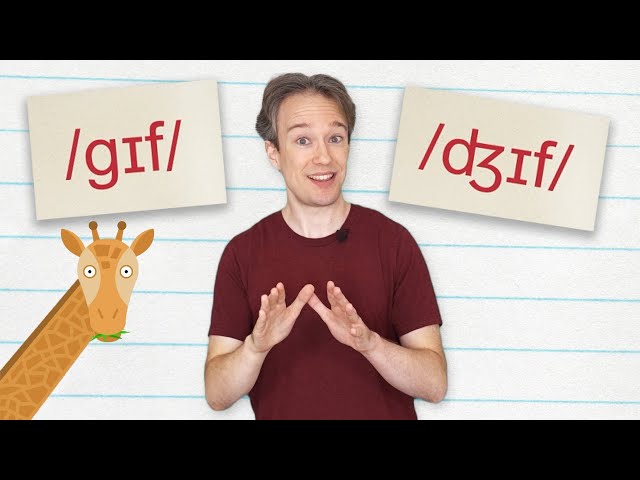 ShortIt's pronounced GIF.HumanitiesCommunication SkillsMedia+3 more
 MediumAbso-bloody-lutely: Expletive InfixationHumanitiesCommunication SkillsPublishing+3 more
 ShortThere's Nothing Wrong With Saying "10 Items or Less": Descriptivism vs PrescriptivismProfessional DevelopmentCommunication SkillsPublishing+3 more
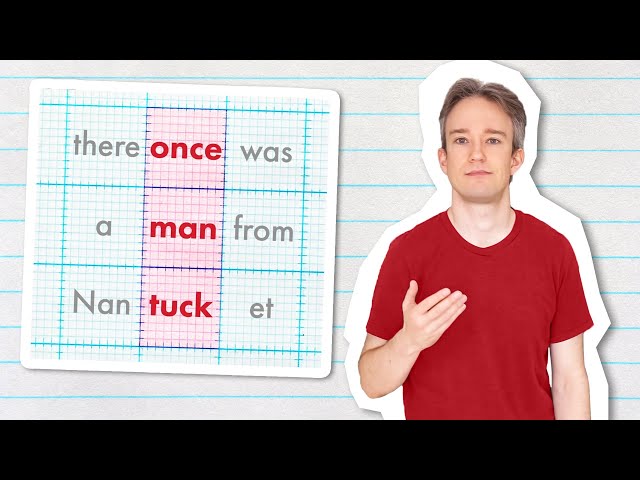 MediumWhy Shakespeare Could Never Have Been FrenchArtsCommunication SkillsPublishing+3 more
 ShortƏ: The Most Common Vowel in EnglishHumanitiesCommunication SkillsEdTech+3 more