The UK's Debt Crisis Explained
The UK is facing a serious debt crisis, with its national debt being larger than its entire economy and growing every month. The cost of borrowing is increasing, making it harder for the government to fund public services like healthcare and education, as more money is used to pay off old debt. This situation is also causing higher mortgage rates, increased prices, and a weaker pound. Historically, the UK has always paid its debts, making its bonds a safe investment, but this trust is now weakening. If investors lose confidence and stop buying UK debt, it could lead to a severe financial crisis, similar to past events in the 1970s and 2022. The potential solutions, such as cutting spending, raising taxes, or the Bank of England creating more money, all have significant risks and could worsen the situation, potentially leading to a decline in Britain's global financial reputation.
Key Vocabulary
A complete and often sudden failure or collapse, especially in an economic or financial system.
Examples:
- The unexpected stock market crash led to a financial meltdown for many investors.
- Without swift intervention, the company faced an imminent meltdown due to its mounting debts.
- The technical glitch caused a system-wide meltdown, bringing all operations to a halt.
To entice or attract someone or something, often by offering something desirable.
Examples:
- The new restaurant used special discounts to lure customers in during its opening week.
- The promise of adventure was enough to lure the young explorer to distant lands.
- Advertisements often try to lure consumers with images of luxury and comfort.
In a way that is carefully planned and designed to achieve a specific goal or advantage.
Examples:
- The chess player moved his knight strategically to control the center of the board.
- The company strategically placed its new product in high-traffic retail locations.
- They decided to strategically delay the announcement to maximize its impact.
An act of giving financial assistance to a failing business or economy to save it from collapse.
Examples:
- The government approved a large bailout package for the struggling airline.
- Without a timely bailout, the bank would have been forced to declare bankruptcy.
- Critics argued that the bailout rewarded poor management decisions.
Individuals who persistently follow, observe, or harass someone, often in a threatening or unwanted manner.
Examples:
- The celebrity hired extra security to protect herself from potential stalkers.
- Online platforms have implemented features to help users block digital stalkers.
- The detective warned the victim about the dangers of ignoring the behavior of stalkers.
Showing no activity, growth, or change; dull and sluggish.
Examples:
- The stagnant job market made it difficult for recent graduates to find employment.
- After years of innovation, the company's product line became stagnant.
- The stagnant air in the room made it feel stuffy and unpleasant.
Policies enacted by a government to reduce budget deficits, typically through measures such as spending cuts, tax increases, and reduced public services.
Examples:
- The country implemented a period of austerity to bring its national debt under control.
- Many citizens protested the harsh austerity measures, citing their impact on public welfare.
- The new economic plan emphasized austerity to restore fiscal stability.
To make or become firm, steady, or unwavering; to prevent from changing or fluctuating wildly.
Examples:
- The pilot worked to stabilize the aircraft during the unexpected turbulence.
- New regulations were introduced to stabilize the housing market.
- After the surgery, the medical team monitored the patient to ensure their condition would stabilize.
Increased by four times the original amount.
Examples:
- The company's profits quadrupled after the successful launch of its new product.
- Over the past decade, the population of the small town has quadrupled.
- The demand for the rare artifact quadrupled its market value overnight.
Not allowing for mistakes or failures; harsh and difficult.
Examples:
- The desert landscape proved to be an unforgiving environment for the hikers.
- The unforgiving nature of the competition meant only the best would succeed.
- The unforgiving deadlines put immense pressure on the development team.
Remaining solvent or financially secure; able to stay out of debt or difficulty.
Examples:
- The small business struggled to stay afloat during the economic downturn.
- A timely investment helped keep the struggling startup afloat.
- Despite numerous challenges, the charity managed to stay afloat through generous donations.
A metaphorical term referring to a barrier that, once opened, allows a large and uncontrolled outflow of something.
Examples:
- The new policy opened the floodgates for foreign investment in the region.
- His emotional speech opened the floodgates of tears for many in the audience.
- Once the news broke, it opened the floodgates for public criticism.
To be the dominant or most powerful influence; to prevail widely.
Examples:
- Silence reigned in the library as students focused on their studies.
- For decades, the company's founder continued to reign supreme in the industry.
- After the storm, chaos seemed to reign throughout the city.
Fell or dropped suddenly and rapidly.
Examples:
- The stock market plunged after the unexpected announcement.
- The temperature plunged overnight, bringing an early frost.
- He plunged into the cold water without hesitation.
Appears as a vague, often menacing or threatening, shape or prospect.
Examples:
- The threat of a strike looms over the negotiations.
- A large dark cloud looms on the horizon, signaling a coming storm.
- The deadline for the project looms, creating pressure for the team.
Balancing unsteadily; on the verge of falling or collapse.
Examples:
- The old bridge was teetering under the weight of the heavy truck.
- The company's finances were teetering on the brink of disaster.
- He stood teetering on one leg, trying to maintain his balance.
A state of great disturbance, confusion, or uncertainty.
Examples:
- The political turmoil in the region led to widespread unrest.
- After the sudden resignation, the department was in a state of turmoil.
- She tried to find calm amidst the emotional turmoil of her life.
To undo or fall apart; to become undone or to collapse.
Examples:
- The carefully constructed plan began to unravel when key details were overlooked.
- As the truth emerged, the entire conspiracy started to unravel.
- The complex plot of the novel slowly began to unravel for the reader.
The main support or most important part of something; the source of strength or resilience.
Examples:
- Small businesses are often considered the backbone of the local economy.
- His unwavering determination was the backbone of his success.
- The dedicated team formed the backbone of the entire organization.
Small waves or disturbances that spread outwards from a point; a spreading effect or influence.
Examples:
- The stone thrown into the pond created ripples that spread across the water.
- The new policy had ripples throughout the entire industry.
- His kind gesture created positive ripples in the community.
Related lessons
 LongAre Boomers The Most Selfish Generation In History?EconomicsEconomic ForecastingFinance+3 more
 LongEverything You Need to Know About China's Ruthless EconomyEconomicsEconomic ForecastingFinance+3 more
 LongWe Can't Afford Groceries, Yet Billionare Wealth is ExplodingEconomicsEconomic ForecastingFinance+3 more
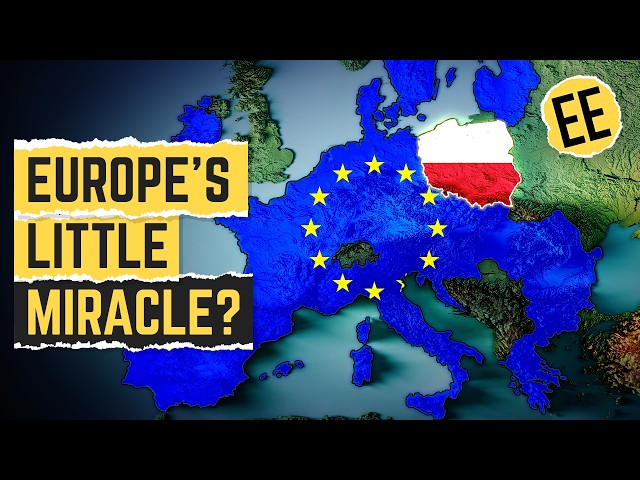 MediumHow Poland Quietly Became Europe’s Rising PowerEconomicsEconomic ForecastingFinance+3 more
 LongWhy Japan's Economy Is AwfulEconomicsEconomic ForecastingFinance+3 more
 MediumBangladesh Could Become Asia's Strongest EconomyEconomicsEconomic ForecastingGovernment+3 more