How did the Egyptians forget Hieroglyphs?
Egyptian hieroglyphs, a writing system that started around 3300 BC, were mainly used for religious and funeral purposes. They lasted until 394 AD, much longer than many other ancient writing systems. Even when Egypt was ruled by Romans, hieroglyphs continued to be used, especially in temples, for things like hymns and myths. Roman emperors, like the Egyptian kings before them, supported these temples and were shown in reliefs as pharaohs. However, the Romans gradually took control of the temples' money and land, making them less powerful. After Emperor Constantine became Christian, support for the temples ended, leading to their decline. As temples closed and fewer people learned the ancient script, the knowledge of hieroglyphs faded. By the mid-5th century, very few people could correctly understand hieroglyphs, with the last known inscription made in 394 AD at the Temple of Isis at Philae.
Key Vocabulary
To form or cause to form small waves or undulations on a surface, often indicating a gentle disturbance.
Examples:
- A stone skipped across the pond, causing the water to ripple outwards.
- The light breeze made the tall grass ripple in the field.
- She noticed the fabric of the curtain ripple slightly as the window was opened.
To move unsteadily from side to side with a slight, irregular motion, often suggesting a lack of stability.
Examples:
- The old table wobbles whenever someone leans on it.
- The child's first steps were characterized by a cute wobble.
- After the long journey, the tired traveler's legs started to wobble.
Belonging to an earlier period, often used to describe something that is very old or old-fashioned and no longer in common use.
Examples:
- Many people find the language in Shakespeare's plays to be somewhat archaic.
- The museum displayed an archaic farming tool that predated modern machinery.
- Using a rotary phone in today's digital age feels incredibly archaic.
Forming an integral part of a structure or system; permanently installed or incorporated.
Examples:
- The kitchen features a builtin oven and microwave.
- Many modern cars come with a builtin navigation system.
- The new software has a builtin security feature that protects user data.
A fixed regular sum paid as a salary or allowance, especially to a clergyman or a student.
Examples:
- Graduate students often receive stipends to cover their living expenses while studying.
- The volunteer organization provided small stipends to its field workers.
- Artists participating in the residency program were granted monthly stipends.
A type of bird of prey known for its speed and keen eyesight, often used in falconry.
Examples:
- The falcon soared high above the cliffs, scanning for its next meal.
- In medieval times, training falcons for hunting was a popular sport among nobility.
- The wildlife sanctuary is working to protect endangered falcon species.
Taking or seizing someone's property with authority, often as a penalty or for public use.
Examples:
- The customs officer was within his rights to confiscate the illegal goods.
- The school principal had a policy of confiscating cell phones during class.
- The government began confiscating land for the construction of the new highway.
In a manner that uses allegory, representing abstract ideas or principles by characters, figures, or events in a story, poem, or picture.
Examples:
- The fable allegorically teaches a lesson about the dangers of greed.
- Many ancient myths can be interpreted allegorically, revealing deeper truths about human nature.
- The artist's painting depicted the struggle for freedom allegorically through the image of a caged bird.
Converted information into a particular form or system for transmission or storage, often in a way that is not immediately obvious or requires a key to understand.
Examples:
- The secret message was encoded using a complex cipher.
- DNA contains genetic information encoded in its structure.
- The old map had clues encoded within its illustrations, leading to a hidden treasure.
The title of an ancient Egyptian monarch.
Examples:
- The pharaohs of Egypt were considered divine rulers.
- Many magnificent tombs were built for the pharaohs of the New Kingdom.
- Ancient texts describe the elaborate coronations of the Egyptian pharaohs.
Raises to a higher position or level, or lifts something up.
Examples:
- The hydraulic lift elevates the car for easy maintenance.
- Good architecture often elevates the human spirit.
- She uses a special pillow that elevates her head slightly while she sleeps.
A collection of various kinds of things.
Examples:
- The candy shop offered a wide assortment of chocolates.
- He brought an assortment of tools to help with the repair work.
- The gift basket contained an assortment of gourmet cheeses and crackers.
Aroused the curiosity or interest of someone; fascinated.
Examples:
- The mysterious old house greatly intrigued the children.
- She was intrigued by the concept of time travel after reading the book.
- His unusual hobby always intrigued new acquaintances.
Relating to or denoting a simplified cursive form of ancient Egyptian script, used for everyday documents.
Examples:
- The Rosetta Stone includes an inscription in demotic script, alongside hieroglyphic and Greek texts.
- Demotic was the common script for administrative records in later ancient Egypt.
- Scholars studied demotic papyri to understand daily life in ancient Egypt.
Spoiled the surface or appearance of something, especially with writing or drawings.
Examples:
- The vandals defaced the ancient monument with graffiti.
- Someone had defaced the poster by drawing a mustache on the figure.
- The old book was valuable, but its cover had been badly defaced.
Reduced in extent or quantity; imposed a restriction on.
Examples:
- The new regulations curtailed the company's ability to expand.
- Due to budget cuts, several public services were curtailed.
- His vacation plans were curtailed by an unexpected work assignment.
Symbolic objects or designs that represent a country, organization, or idea.
Examples:
- The dove is an emblem of peace.
- The lion is a common emblem of strength and courage.
- Each knight wore a distinct emblem on his shield.
A small panel of keys, typically arranged in a grid, used to operate a device or enter data.
Examples:
- She entered the security code on the keypad to unlock the door.
- The new phone has a tactile keypad that makes typing easier.
- He pressed the numbers on the keypad to dial the phone.
An underground cemetery consisting of a system of tunnels and rooms with recesses for coffins or tombs.
Examples:
- The ancient city's catacombs stretched for miles beneath the streets.
- Explorers discovered a hidden entrance to the catacombs.
- The tour guide led the group through the dimly lit catacombs.
Long existence or service.
Examples:
- The company attributes its longevity to its commitment to quality products.
- Eating a healthy diet and exercising regularly can contribute to a person's longevity.
- The ancient redwood trees are known for their incredible longevity.
Related lessons
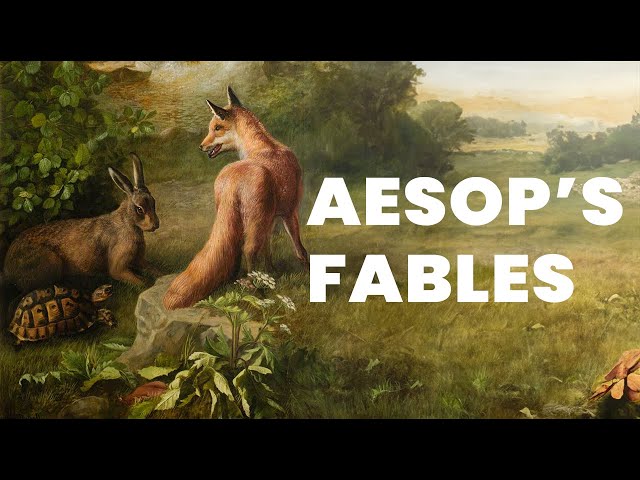 MediumThe Ancient Blueprint For All StorytellingHumanitiesHistorical AnalysisMedia+3 more
 LongThe Gist Of Western PhilosophyHumanitiesHistorical AnalysisHigher Education+3 more
 MediumDo You Have a Free Will?HumanitiesHistorical Analysis
 LongRecreating the Last Meal of Ötzi the IcemanHumanitiesHistorical AnalysisResearcher+1 more
 LongThe Birth of China - Hunters on the Yellow River (20000 BCE to 7000 BCE)HumanitiesHistorical AnalysisResearcher+1 more
 LongWhat did Boudica Really Look Like? History & Facial Reconstructions of the Celtic Rebel & HeroHumanitiesHistorical Analysis