A Scientist Spilled 2 Drops Organic Mercury On Her Hand. This Is What Happened To Her Brain.
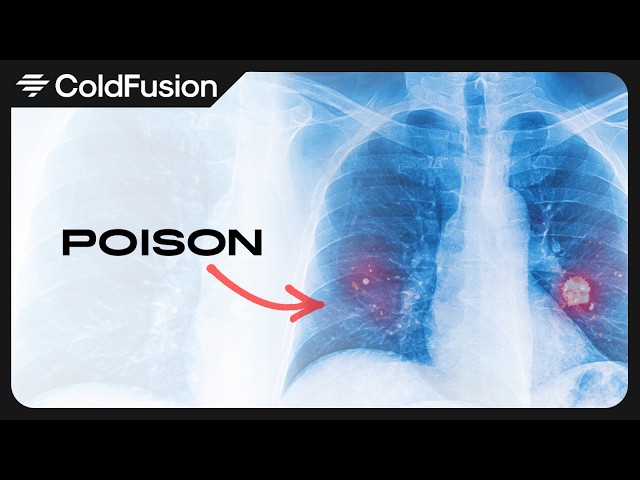
A chemistry professor researching toxic metals accidentally spilled two drops of a highly poisonous liquid called dimethylmercury on her gloved hand. Although she cleaned it up and didn't feel anything, the chemical passed through her glove and into her body. Over several months, she started having problems with balance, walking, and speaking, and her health got worse very quickly. Doctors found very high levels of mercury in her blood and realized the poison was accumulating in her brain and nervous system because it mixes well with fat, which the brain has a lot of. Sadly, by the time symptoms appeared, it was too late to save her, and she passed away. Her case led to much stricter safety rules for handling dangerous chemicals in laboratories worldwide.
Key Vocabulary
To speak indistinctly, often characterized by words running together or sounds being unclear, typically due to intoxication, fatigue, or a neurological condition.
Examples:
- After a long night without sleep, his speech became noticeably slurred during the morning meeting.
- The witness described the suspect as having slurred speech, making it difficult to understand his exact words.
- A sudden stroke can cause a person to experience slurred speech, among other symptoms.
To spread or cause to spread over a wide area or through a substance, often gradually and imperceptibly.
Examples:
- The aroma of freshly baked bread began to diffuse throughout the entire house.
- Light diffused through the frosted glass, creating a soft glow in the room.
- The new regulations are designed to diffuse power more evenly across the organization.
A unit of mass equal to one thousandth of a gram. It is commonly used for measuring very small quantities of substances, especially in medicine and chemistry.
Examples:
- The doctor prescribed a daily dose of 500 milligrams of the medication.
- Each vitamin tablet contains only a few milligrams of active ingredients.
- Scientists measured the contaminant levels in the water in milligrams per liter.
An abbreviation for milligrams, a unit of mass equal to one thousandth of a gram, frequently used in medical and scientific contexts.
Examples:
- The label indicated that each serving contained 10 mg of sodium.
- The chemist carefully weighed out 25 mg of the compound for the experiment.
- For optimal absorption, the supplement should be taken at a dose of 200 mg per day.
The process of excreting urine from the body; the act of voiding the bladder.
Examples:
- Frequent urination can be a symptom of certain medical conditions.
- He experienced a burning sensation during urination, prompting a visit to the doctor.
- Proper hydration is important for healthy urination and kidney function.
An involuntary and almost instantaneous movement in response to a stimulus, often mediated by the nervous system without conscious thought.
Examples:
- The doctor tapped his knee to test his patellar reflex.
- She had a quick reflex, catching the falling vase before it hit the floor.
- The blinking reflex protects the eyes from foreign objects.
A covering or casing that encloses or protects something, often elongated in shape.
Examples:
- The electrician carefully removed the protective plastic sheath from the electrical cable.
- The sword was kept safely in its leather sheath.
- A strong, fibrous sheath surrounded the muscle tissue.
To process a substance in the body through metabolism, converting it into energy or other compounds, or breaking it down for excretion.
Examples:
- The liver's primary role is to metabolize fats and proteins.
- Some individuals metabolize certain drugs more slowly than others.
- The body needs specific enzymes to metabolize complex carbohydrates.
On or relating to both sides of something, especially the body or a part of the body.
Examples:
- The patient experienced pain bilaterally in both knees.
- The surgeon noted a symmetrical swelling occurring bilaterally across the patient's face.
- The damage to the brain affected motor control bilaterally, impacting both left and right sides of the body.
A unit of volume equal to one thousandth of a liter, commonly used for measuring small liquid quantities.
Examples:
- The recipe called for exactly 50 milliliters of vanilla extract.
- The syringe was marked with increments of one milliliter.
- He carefully measured out 10 milliliters of the solution for the experiment.
The back or upper surface of a body part, such as the hand, foot, or tongue.
Examples:
- She noticed a small rash on the dorsum of her hand.
- The physician examined the dorsum of the patient's foot for swelling.
- The insect had prominent markings on the dorsum of its body.
The action or process of draining or losing blood, often to the point of death.
Examples:
- The severe internal bleeding led to rapid exsanguination.
- Emergency responders worked quickly to prevent exsanguination from the deep wound.
- The victim's death was attributed to exsanguination due to multiple injuries.
Characterized by ataxia, a neurological sign consisting of lack of voluntary coordination of muscle movements, including gait abnormality, speech changes, and eye movement abnormalities.
Examples:
- The patient's ataxic gait made walking difficult and unstable.
- After the injury, he exhibited an ataxic tremor in his hands.
- The doctor observed his ataxic movements during the neurological examination.
Reduced to half of its original size, amount, or value.
Examples:
- The company's profits halved after the economic downturn.
- To make the recipe suitable for a smaller serving, she halved all the ingredients.
- The new production method effectively halved the manufacturing time.
Adjusted, regulated, or varied in intensity, tone, or pitch; adapted or controlled to a particular level or condition.
Examples:
- The speaker modulated her voice to emphasize key points in her presentation.
- The thermostat modulated the temperature to maintain a comfortable environment.
- The artist modulated the colors in the painting to create a sense of depth and contrast.
A unit of mass equal to one millionth of a gram. It is used for measuring extremely small quantities, particularly in scientific and biological contexts.
Examples:
- The recommended daily allowance for Vitamin D is often given in micrograms.
- Trace amounts of the substance, measured in micrograms, were detected in the sample.
- Each dose of the vaccine contained only a few micrograms of the active ingredient.
Long, slender projections of a nerve cell (neuron) that typically conduct electrical impulses away from the neuron's cell body.
Examples:
- Myelin sheaths insulate the axons, allowing for faster signal transmission.
- Damage to the axons can disrupt communication between nerve cells.
- New research is exploring how to repair damaged axons in spinal cord injuries.
An ion or molecule that binds to a central metal atom to form a coordination complex, or a molecule that binds to a receptor on a cell surface.
Examples:
- The drug acts as a ligand, binding specifically to the target protein.
- In this chemical reaction, the water molecule functions as a ligand.
- Researchers are developing new ligands to improve the selectivity of certain medications.
In a way that relates to the normal functions of living organisms and their parts, or consistent with the processes of the body.
Examples:
- The body responds physiologically to stress by releasing certain hormones.
- It is physiologically impossible for humans to breathe underwater without assistance.
- The drug was designed to interact physiologically with specific enzymes in the body.
Having an affinity for, tending to combine with, or capable of dissolving in lipids (fats).
Examples:
- Lipophilic substances can easily cross cell membranes, which are primarily composed of lipids.
- Many pesticides are lipophilic, allowing them to accumulate in fatty tissues.
- The drug's lipophilic nature contributed to its slow release from the body's fat stores.
Related lessons
 LongI Took an IQ Test to Find Out What it Actually MeasuresScienceMedical ResearchHealthcare+3 more
 LongHow One Company Secretly Poisoned The PlanetScienceMedical ResearchHealthcare+2 more
 LongHow Microplastics Slowly Make Their Way Inside UsScienceMedical ResearchHealthcare+2 more
 MediumI promise this story about microwaves is interesting.ScienceMedical ResearchMedical+3 more
 ShortWhich Is "Bouba", and Which Is "Kiki"?ScienceMedical ResearchHealthcare+2 more
 MediumIs Our Food Becoming Less Nutritious?ScienceMedical ResearchAgriculture+3 more