Are There Lost Alien Civilizations in Our Past?
The video explores the idea that advanced civilizations might have existed on Earth millions of years ago, before humans. It considers what remains of past human societies, from hunter-gatherers to modern industrial ones, to understand what traces ancient alien civilizations might have left. Hunter-gatherer societies leave very few traces, and even large empires might disappear over millions of years. Industrial civilizations, like ours, leave more long-lasting evidence, such as changes in soil chemistry, plastics in oceans, and altered atmospheric CO2. However, even these traces could become very subtle over hundreds of millions of years and might be mistaken for natural events. So far, there is no scientific evidence of any previous alien civilizations on Earth.
Key Vocabulary
Increasing or growing at a very rapid rate, where the rate of growth itself increases over time.
Examples:
- The company's customer base grew exponentially once their new product launched.
- The spread of misinformation can be exponential in the age of social media.
- With compound interest, investments can grow exponentially over many years.
The ability to withstand wear, pressure, or damage; robustness.
Examples:
- The durability of this outdoor furniture means it can stay outside in all weather.
- Engineers designed the bridge for maximum durability to resist strong winds and earthquakes.
- The ancient Roman roads are a testament to their remarkable durability.
Most strongly and solidly built or made.
Examples:
- Among all the tents, this one is the sturdiest and best suited for harsh mountain conditions.
- The sturdiest oak tree in the forest had stood for centuries, surviving countless storms.
- To protect valuable items, one should choose the sturdiest safe available.
To break or fall apart into small fragments, especially as a result of decay or erosion.
Examples:
- After years of neglect, the old stone wall began to crumble.
- The dry cake started to crumble as soon as I tried to slice it.
- Without proper maintenance, even grand empires can crumble over time.
To use up or exhaust the supply or resources of something.
Examples:
- Overfishing severely depletes the fish populations in the ocean.
- Lack of sleep quickly depletes one's energy reserves.
- Excessive logging depletes the forests and harms wildlife habitats.
Able to be identified from previous encounters or knowledge.
Examples:
- Even after many years, her voice was instantly recognizable.
- The artist's unique style makes his paintings easily recognizable.
- The ancient ruins were still recognizable as a temple, despite centuries of erosion.
Something produced in the making of something else; a secondary and often unintended result.
Examples:
- Sawdust is a common byproduct of the timber industry.
- Increased carbon emissions are an unfortunate byproduct of industrialization.
- Learning problem-solving skills is a valuable byproduct of playing strategic games.
An object made by a human being, typically an item of cultural or historical interest.
Examples:
- Archaeologists discovered ancient artifacts, including pottery and tools, at the dig site.
- The museum displayed a collection of indigenous artifacts from the region.
- Even simple household items from a past era can be considered historical artifacts.
A relatively small, inactive, rocky body orbiting the Sun.
Examples:
- Scientists are tracking an asteroid that is predicted to pass close to Earth.
- The impact of a large asteroid is believed to have caused a major extinction event.
- Space agencies are developing technologies to potentially deflect an asteroid threat.
A widespread occurrence of an infectious disease in a community at a particular time; more broadly, a rapid spread or increase in the occurrence of something.
Examples:
- The city faced an epidemic of flu cases during the winter months.
- There's been an epidemic of online scams targeting vulnerable individuals.
- Public health officials worked quickly to contain the epidemic.
The remains or impression of a prehistoric organism preserved in petrified form or as a mold or cast in rock.
Examples:
- Paleontologists unearthed a rare dinosaur fossil in the desert.
- The discovery of a new fossil provided crucial insights into early human evolution.
- Ammonite fossils are often found in sedimentary rock formations.
A period of a thousand years.
Examples:
- The ancient forest has stood for millennia, a silent witness to history.
- Some stars will continue to burn for many millennia before they exhaust their fuel.
- The traditions of the indigenous tribe have been passed down for millennia.
Massive structures with a square or triangular base and sloping sides that meet at a point, especially those built in ancient Egypt or Mesoamerica.
Examples:
- The Great Pyramids of Giza are among the most iconic ancient wonders of the world.
- Archaeologists continue to study the purpose and construction methods of the Mayan pyramids.
- The shape of the modern art museum resembled a series of glass pyramids.
An area of low-lying, uncultivated ground where water collects; a bog or marsh.
Examples:
- Alligators are commonly found in the swamps of the southeastern United States.
- The explorers had to navigate through dense swamps, battling mosquitoes and thick vegetation.
- After heavy rains, the low-lying fields turned into temporary swamps.
Having or showing an aptitude for inventing, devising, or contriving; creative.
Examples:
- The chef was highly inventive, always coming up with new and exciting dishes.
- Her inventive approach to problem-solving helped the team overcome a major obstacle.
- The company is known for its inventive use of recycled materials in its products.
Of or relating to the cosmos or universe, especially as distinct from the Earth.
Examples:
- The new telescope allowed scientists to observe distant cosmic phenomena.
- The novel explored themes of cosmic justice and humanity's place in the universe.
- A sudden burst of cosmic rays could interfere with satellite communications.
Decayed or caused to decay by the action of bacteria and fungi; decomposed.
Examples:
- The old wooden fence had completely rotted away after years of exposure to rain.
- The fruit left on the counter quickly rotted, attracting fruit flies.
- The ancient ship's timbers had rotted, leaving only a faint outline on the seabed.
Astonishing or awe-inspiring in its beauty, splendor, or magnitude.
Examples:
- The view from the mountain summit was absolutely breathtaking.
- The acrobats performed a series of breathtaking stunts that left the audience in awe.
- The architect designed a building with a breathtaking glass facade.
Moved or forced out of its usual or proper place.
Examples:
- The earthquake displaced thousands of residents from their homes.
- Heavy machinery was used to displace the large rocks blocking the road.
- New technologies often displace older ones, leading to shifts in industry.
The process of coming into being or becoming known.
Examples:
- The emergence of new technologies has revolutionized the way we communicate.
- Scientists are studying the emergence of antibiotic-resistant bacteria.
- The film explores the emergence of rock and roll music in the 1950s.
Related lessons
 LongThe Final Images We Will Ever See of Pluto and ArrokothScienceHistorical AnalysisAerospace+2 more
 LongLife And Death 3,000,000 Years AgoScienceHistorical AnalysisResearcher+1 more
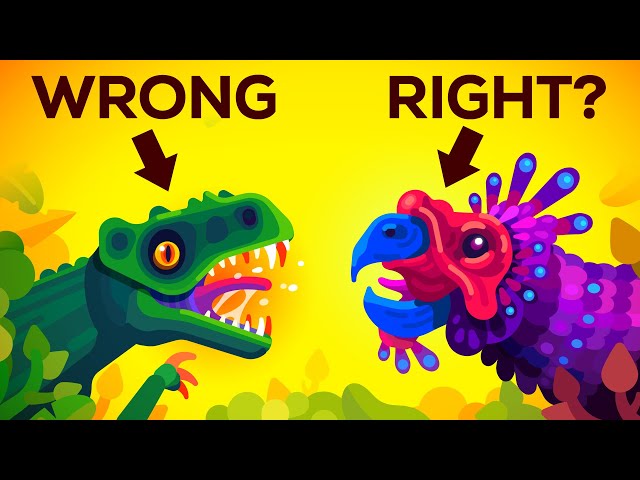 MediumWhat Dinosaurs ACTUALLY Looked Like?ScienceHistorical AnalysisResearcher+1 more
 LongHomo Erectus - The First HumansScienceHistorical AnalysisResearcher+1 more
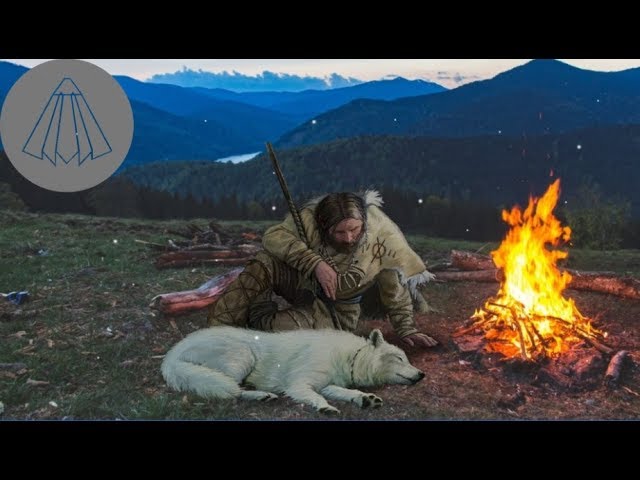 MediumHow Humans and Dogs Evolved TogetherScienceHistorical AnalysisResearcher+1 more
 LongIf you don't understand this, you don't understand evolutionScienceHistorical Analysis