Something Strange Happens When You Trace How Connected We Are
The text explains the 'six degrees of separation' idea, which suggests anyone on Earth can be connected through a chain of six or fewer people. This is possible because even a few 'shortcuts' (connections outside your usual group) in a clustered network can make the whole world feel small. While this connectivity allows things like information and diseases to spread quickly, it also means negative influences can spread easily. The text also introduces the idea of 'hubs' (super-connected individuals or places) which naturally emerge in growing networks and significantly impact how things spread. Finally, it discusses how network structure can affect cooperation, showing that while strong local connections foster cooperation, too many random connections can lead to more negative interactions, but the ability to choose your connections can help promote cooperation.
Key Vocabulary
A thin sheath, typically made of latex, worn during sexual intercourse as a contraceptive or to prevent the spread of sexually transmitted infections.
Examples:
- Public health campaigns often emphasize the importance of using a condom for safe sex.
- The clinic provided free condoms to promote responsible sexual health.
- Before engaging in sexual activity, he ensured he had a condom available.
Curious and eager to learn or know things; inclined to ask questions.
Examples:
- The inquisitive student always asked thoughtful questions after the lecture.
- Her inquisitive nature led her to explore many different fields of study.
- An inquisitive mind is often a hallmark of a successful researcher.
A dish made from ground chickpeas or fava beans, often mixed with herbs and spices, formed into balls or patties and then deep-fried. It is a popular Middle Eastern food, often served in pita bread.
Examples:
- For lunch, she ordered a delicious falafel wrap with tahini sauce.
- The street vendor was famous for his crispy falafel.
- Making falafel from scratch requires soaking the chickpeas overnight.
Houses where men can visit prostitutes. These establishments are often illegal and are associated with commercial sexual exploitation.
Examples:
- Historically, some cities had designated districts where brothels operated openly.
- Authorities conducted raids on suspected brothels as part of an effort to combat human trafficking.
- The policy aimed to reduce the spread of disease by targeting activities in brothels.
A disproportionate weight in favor of or against an idea or thing, usually in a way that is closed-minded, prejudicial, or unfair. In the context of networks, it refers to a tendency or preference that influences connections.
Examples:
- The study design had a clear bias towards certain demographics, affecting the results.
- It is important to recognize one's own biases when evaluating information.
- The algorithm showed a bias in its recommendations, favoring popular items over newer ones.
Having or showing a wish to do evil to others; malicious.
Examples:
- The villain in the story had a malevolent plan to overthrow the kingdom.
- Rumors spread by malevolent individuals can cause significant harm.
- He sensed a malevolent presence in the old, abandoned house.
In a way that relates to geography, the study of the physical features of the Earth and its atmosphere, and of human activity as it affects and is affected by these, including the distribution of populations and resources.
Examples:
- The company expanded its operations geographically, opening new branches across the country.
- The species is geographically isolated, leading to unique evolutionary paths.
- Understanding how populations are distributed geographically is crucial for urban planning.
Animals that naturally hunt and prey on others. In a broader sense, it can refer to anything that preys on or exploits others.
Examples:
- Lions are apex predators in their ecosystem, maintaining the balance of prey animals.
- The documentary showed how different predators use unique hunting strategies.
- In financial markets, aggressive investors can sometimes act like predators, seeking out vulnerable companies.
To connect or arrange the wiring of something in a different way. In a metaphorical sense, it means to change the fundamental connections or patterns within a system or structure.
Examples:
- The old house needed to be completely rewired to meet modern electrical codes.
- After a significant life event, she felt her brain had been rewired, leading to new perspectives.
- The software update rewired the system's internal logic, improving its efficiency.
To surround and have or hold within; to include comprehensively.
Examples:
- The new curriculum will encompass a wide range of subjects, from science to arts.
- His responsibilities at work encompass project management, client relations, and team leadership.
- The city's historical district encompasses several blocks of preserved 19th-century architecture.
Short for synchronization; the operation or activity of two or more things at the same time or rate. It implies a state of coordination or harmony.
Examples:
- The dancers moved in perfect sync, their movements fluid and precise.
- It's important to keep all your devices in sync to access the latest files.
- The team's efforts were not in sync, leading to delays in the project.
Specialized cells that transmit nerve impulses; the fundamental units of the brain and nervous system, responsible for transmitting information through electrical and chemical signals.
Examples:
- The brain contains billions of neurons that communicate with each other.
- Learning new skills involves the formation of new connections between neurons.
- Damage to certain neurons can impair cognitive functions.
Making a low, continuous, regular sound, often associated with rapid movement or machinery.
Examples:
- The old fan started whirring loudly as soon as it was turned on.
- He could hear the whirring of the computer's hard drive in the quiet room.
- The drone's propellers began whirring before it lifted off the ground.
A final result or consequence, especially a positive one; a reward or benefit received.
Examples:
- The long hours of studying finally had a payoff when she aced her exams.
- Investing in renewable energy has a long-term payoff for the environment.
- After years of hard work, the successful launch of the product was a huge payoff for the team.
A small group of things, especially plants or hair, growing or held together. In a more abstract sense, it can refer to a small, close-knit group of people.
Examples:
- A clump of trees stood at the edge of the field, providing shade.
- She noticed a small clump of wild flowers growing by the roadside.
- The friends formed a tight clump, sharing whispered jokes during the assembly.
A subatomic particle, such as a photon or a gluon, that transmits a force and has an integer spin. The Higgs boson, in particular, is associated with giving other particles mass.
Examples:
- The discovery of the Higgs boson was a monumental achievement in particle physics.
- Bosons play a crucial role in mediating fundamental forces in the universe.
- Scientists continue to study the properties of various bosons to understand the nature of matter.
To catch or hold onto something, often securely. In the context of networks, it implies attaching or connecting to an existing structure.
Examples:
- The gate latched securely, preventing the dog from escaping.
- The new company latched onto the emerging market trend, gaining a significant advantage.
- He latched onto the idea immediately, seeing its potential for success.
Violent or sudden changes or disruptions to something, often causing significant disturbance.
Examples:
- The political upheavals in the region led to widespread social unrest.
- The company underwent major upheavals during the transition to new leadership.
- Technological advancements often bring about societal upheavals, changing daily life.
The scientific study of crime and criminals, including their behavior, causes, and prevention.
Examples:
- She decided to pursue a degree in criminology to understand the roots of criminal behavior.
- The criminology department conducted research on the effectiveness of different policing strategies.
- His interest in forensic science stemmed from his studies in criminology.
A large group of single-celled microorganisms that typically live in soil, water, organic matter, or the bodies of plants and animals. Some bacteria can cause disease, while others are beneficial.
Examples:
- Antibiotics are medicines used to treat infections caused by bacteria.
- Beneficial bacteria in the gut play a vital role in digestion and immune health.
- Scientists are constantly discovering new species of bacteria in diverse environments.
Related lessons
 MediumThe Dead Internet TheoryTechnologyArtificial IntelligenceSoftware+3 more
 MediumThe Strange Origins of Wi-Fi – An Australian Invention?TechnologyInnovation ManagementSoftware+3 more
 MediumWhat does Oracle actually do?TechnologyCloud ComputingSoftware+3 more
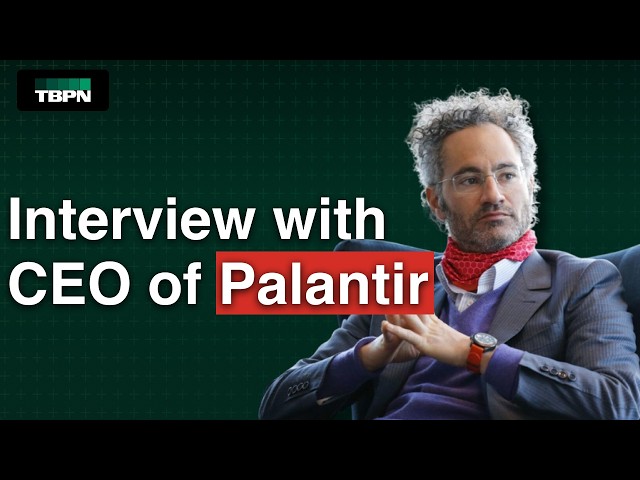 LongPalantir CEO Alex Karp on conspiracy theories, short sellers & advice for young people.TechnologyArtificial IntelligenceSoftware+3 more
 MediumLinux: The Untold StoryTechnologySoftware DevelopmentSoftware+3 more
 LongThinking Deeper in Gemini — Jack Rae, Google DeepMindTechnologyArtificial IntelligenceSoftware+3 more